Updated: March 18, 2026
New to NASCAR and want to understand it fast? This guide breaks down the rules, race formats, series structure and how to watch it all go down live, with a dedicated section on what’s changing in NASCAR for 2026—including The Chase playoff format, points updates, rule changes, schedule changes and major driver/team moves.
If you’re mainly looking for broadcast info, start here: 2026 NASCAR Cup Series TV Schedule.
TABLE OF CONTENTS
NASCAR in 2026: What’s Changing
The 2026 NASCAR season brings major changes across all three national series — including the return of The Chase playoff format, new rules, horsepower increases, schedule shakeups and significant driver and team moves. Here’s a complete breakdown of everything changing in the NASCAR Cup Series, O’Reilly Auto Parts Series and Craftsman Truck Series for 2026.
Biggest NASCAR Changes in 2026
- Playoffs: NASCAR brings back The Chase format in all three national series.
- Points: A race win is now worth 55 points.
- Series name: The Xfinity Series is now the NASCAR O’Reilly Auto Parts Series.
- Cup rules: Cup horsepower increases to 750 at select tracks.
- Schedule: Championship Weekend returns to Homestead-Miami Speedway.
- Trucks: Ram joins the Craftsman Truck Series manufacturer lineup.
Series Changes for 2026
- Xfinity Series: Rebranded as the O’Reilly Auto Parts Series.
- Ram: Returns to NASCAR as a manufacturer in the Craftsman Truck Series (partnering with Kaulig Racing).
Playoff Format Changes for 2026 (the Chase Returns)
- The Chase returns: NASCAR replaces the elimination-style playoff format with a Chase-style postseason.
- No “win-and-you’re-in”: Regular-season wins no longer guarantee a postseason spot.
- Points-based qualification: Chase fields are set by regular-season points standings.
- Win points increase: Race winners earn 55 points (up from 40).
- No playoff points: Bonus “playoff points” are removed.
- Seeded reset: Starting points are seeded based on regular-season finish.
- Chase length by series:
- NASCAR Cup Series: 10 races
- NASCAR O’Reilly Auto Parts Series: 9 races
- NASCAR Craftsman Truck Series: 7 races
- Champion determined by total points: The driver with the most points at season’s end wins the title.
Rule Changes for 2026
- Horsepower (Cup Series): Increased from 670 to 750 hp at tracks under 1.5 miles and road courses.
- Track package update: Bristol, Darlington, Dover, Nashville, New Hampshire, and St. Louis use the short-track package.
- Safety: Permanent A-post flap mandated to help prevent flips.
- Cup driver participation limits: Cup drivers can run 10 O’Reilly races and 8 Truck races (up from five each).
- Age rule (O’Reilly Series): 17-year-olds are eligible at road courses and ovals 1.25 miles or shorter.
- Qualifying enforcement (drafting tracks): Times disallowed if drivers use hands to manipulate airflow during qualifying.
- Charters: Teams offered non-expiring (“evergreen”) charters.
- Fastest lap rule: Drivers who enter the garage are ineligible for the fastest-lap bonus.
Schedule Changes for 2026
- Naval Base Coronado (San Diego): Tripleheader weekend for Cup, O’Reilly and Trucks in June.
- Chicagoland Speedway: Returns for Cup + O’Reilly (July 4–5 weekend); replacing Chicago Street Race
- North Wilkesboro: Hosts a Cup points race; All-Star Race moves to Dover.
- Homestead-Miami Speedway: Returns as Championship Weekend host.
- St. Petersburg: Craftsman Truck Series adds a street race during IndyCar weekend.
- Phoenix Raceway: NASCAR + IndyCar share a doubleheader weekend.
- In-Season Challenge: Returns to the Cup schedule.
- Notable date shifts: Watkins Glen (May), Darlington (March), Kansas (April), New Hampshire (August).
- Off-weekends: Cup adds a second off-weekend.
Driver & team changes for 2026
Here are the biggest moves across the NASCAR Cup Series in 2026:
- Connor Zilisch: JR Motorsports to Trackhouse Racing (No. 88)
- Shane van Gisbergen: Trackhouse No. 88 to No. 97
- Daniel Suárez: Trackhouse Racing to Spire Motorsports (No. 7)
- Haas Factory Team: Ford to Chevrolet
- Rick Ware Racing: Ford to Chevrolet
NASCAR 101
Ready to learn NASCAR? Let’s start with the basics.
What is NASCAR?
NASCAR (National Association for Stock Car Auto Racing) is a professional motorsports organization featuring purpose-built stock cars racing across ovals, superspeedways, and road courses.
When is NASCAR season?
The NASCAR season typically runs February through November and includes a regular season followed by a postseason (playoffs). Beginning in 2026, NASCAR will once again be using The Chase format for the postseason.
What NASCAR series exist today?
NASCAR’s three national series are:
- NASCAR Cup Series (top division)
- NASCAR O’Reilly Auto Parts Series (second division; formerly Xfinity)
- NASCAR Craftsman Truck Series (third national division)
Is NASCAR a sport?
Yes—NASCAR is widely considered a sport because it requires elite driving skill, strategy, team execution and physical endurance in extreme heat and high-speed conditions.
HISTORY OF NASCAR
To understand the NASCAR so many people know and love today, we must look back on the sport’s 75+ year history.
The first auto race took place in Chicago, Illinois in 1895, but it wasn’t until 1947 that Bill France founded the sport we know today, NASCAR.
The first official NASCAR racing competition took place on February 15, 1948, at the Daytona Beach Road Course. Today, Daytona International Raceway is one of the most well-known tracks in the country. The first official Strictly Stock NASCAR race took place on June 9, 1949, at Charlotte Speedway in North Carolina.
NASCAR Rules 2026
Here we explain the basic NASCAR rules, race format, safety procedures, qualifying format, pit stops, flags, penalties and 2026 rule changes across the NASCAR Cup Series, NASCAR O’Reilly Auto Parts Series and NASCAR Craftsman Truck Series.
Race Format and Safety
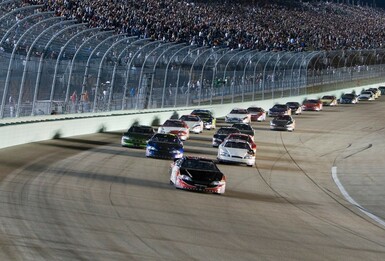
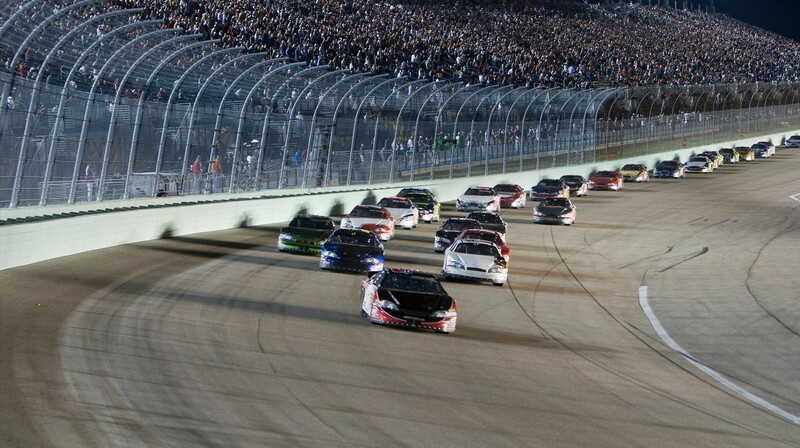
NASCAR races are held on several types of tracks, including short tracks, intermediate ovals, superspeedways and road courses. Race length, lap count, banking and track surface vary by event, which is one reason every weekend feels different.
Most NASCAR races are also divided into stages, with the Coca-Cola 600 remaining a notable exception because it uses four stages instead of three. NASCAR tracks also use safety features such as SAFER barriers to help absorb impact energy during crashes.
Practice and Qualifying
NASCAR updated its practice and qualifying format for 2025, and those procedures continue to shape the 2026 season. In general, group practice sessions were expanded from 20 minutes to 25 minutes, and most events now use single-round qualifying.
At many short tracks, for example, cars are split into two practice groups for a 50-minute total session, followed by a one-round, two-lap qualifying session. Superspeedway events still use special procedures, including Daytona 500 qualifying and Duel races.
NASCAR Flag System
NASCAR uses a simple flag system to communicate race conditions to drivers and teams:
- Green flag: The race has started or restarted
- Green-and-white checkered flag: End of a stage
- Yellow flag: Caution for an incident, debris or weather
- Red flag: Race stopped
- White flag: Final lap
- Black flag: Driver must report to pit road
- Blue flag with yellow stripe: Faster traffic is approaching
- Black-and-white checkered flag: Race is over
Cautions and Restarts
When a caution flag comes out, the field is frozen and cars slow to pace-car speed until the track is safe for a restart. NASCAR also continues to use the Choose Rule at most races, which allows drivers to choose the inside or outside lane for many double-file restarts. The rule does not apply to the initial start of the race.
NASCAR also revised its Damaged Vehicle Policy in 2025, allowing more flexibility for teams to make repairs in the garage and return to the race in some situations.
Pit Road and Pit Stops
During a race, teams use pit stops for fuel, tires and adjustments. NASCAR pit stops are handled by five over-the-wall crew members, and under caution, pit road is controlled by NASCAR procedures and timing. A fast stop can still be completed in roughly 20 seconds or less, depending on the service needed.
Driver and Car Rules
NASCAR vehicle rules differ by series, but cars must meet strict standards for body dimensions, safety equipment, manufacturer styling, numbers, and sponsorship placement. The modern Next Gen car remains the Cup Series platform in 2026. Cup teams generally use the same car throughout a race weekend, and NASCAR tightly regulates component changes and other competition procedures.
NASCAR also continues to use the Open Exemption Provisional (OEP), which was added for the Cup Series in 2025 to allow certain world-class drivers from other motorsports into the field for select races. When used, the OEP creates a 41-car field, and NASCAR retains discretion over which events are eligible.
Charter System
In the Cup Series, organizations that did not already have four full-time cars before 2025 are capped at three full-time teams, while existing four-car organizations were allowed to retain four. After NASCAR’s 2025 settlement with 23XI Racing and Front Row Motorsports, the sport moved to offer evergreen charters, meaning the new charters no longer expire on a fixed date.
NASCAR Penalties
NASCAR can issue pre-race, in-race and post-race penalties for inspection failures, pit-road violations, safety issues or illegal modifications. Penalties can include fines, points deductions, suspensions or disqualification, depending on the severity of the infraction.
NASCAR Series Explained (2026)
NASCAR features three national series, each representing a different level of competition:
- NASCAR Cup Series (top division)
- NASCAR O’Reilly Auto Parts Series (second division; formerly Xfinity Series)
- NASCAR Craftsman Truck Series (third national division)
The main differences between the three series include:
- Level of competition
- Car specifications and regulations
- Season format and championship structure
NASCAR Cup Series
The NASCAR Cup Series is the highest level of stock car racing and features the sport’s top drivers and teams. Cars in this series use the Next Gen platform and can reach speeds of over 200 mph, with manufacturers including Chevrolet, Ford, and Toyota.
Recent NASCAR Cup Series champions:
- 2025: Kyle Larson (Hendrick Motorsports)
- 2024: Joey Logano (Team Penske)
- 2023: Ryan Blaney (Team Penske)
- 2022: Joey Logano (Team Penske)
- 2021: Kyle Larson (Hendrick Motorsports)
NASCAR O’Reilly Auto Parts Series (formerly Xfinity Series)
The NASCAR O’Reilly Auto Parts Series serves as NASCAR’s primary developmental series. Many Cup Series drivers advance through this level before reaching the top division.
Races are often held at the same tracks as the Cup Series but are typically shorter in distance.
Recent O’Reilly Auto Parts Series champions:
- 2025: Jesse Love (Richard Childress Racing)
- 2024: Justin Allgaier (JR Motorsports)
- 2023: Cole Custer (Stewart-Haas Racing)
- 2022: Ty Gibbs
- 2021: Daniel Hemric
NASCAR Craftsman Truck Series
The NASCAR Craftsman Truck Series is unique because drivers compete in modified pickup trucks instead of traditional stock cars. The series races on a mix of short tracks, speedways, and road courses.
Recent Craftsman Truck Series champions:
- 2025: Corey Heim (TRICON Garage)
- 2024: Ty Majeski (ThorSport Racing)
- 2023: Ben Rhodes
- 2022: Zane Smith
- 2021: Ben Rhodes
How NASCAR Playoffs Work (2026 Update)
Beginning in 2026, NASCAR replaced its elimination-style playoff system with a Chase format across all three national series.
Here’s how the new system works:
- Chase qualification:
- NASCAR Cup Series: Top 16 drivers in points
- O’Reilly Auto Parts Series: Top 12
- Craftsman Truck Series: Top 10
- No “win-and-you’re-in”: Drivers qualify based on regular-season points, not race wins.
- Points reset: Chase drivers receive a reset and seeded starting points based on regular-season performance.
- No elimination rounds: Unlike the previous format, drivers are not eliminated after each round.
- Champion decided by total points: The driver with the most points at the end of the season wins the championship.
Famous NASCAR Drivers (All-Time Greats)
Whether you’re a longtime NASCAR fan or just getting into the sport, you’ve most likely heard of some of the drivers that have impacted the sport most. Some of the most famous drivers of all time include:
RICHARD PETTY
Known as “the King,” Richard Petty was an extremely foundational figure in the sport. He competed in what is now the Cup Series from 1958-1992. He was the first (but not the last) driver to win the NASCAR Cup Series Championship seven times and accumulated a record 200 race wins throughout his career. He once won 27 races in a single season.
DALE EARNHARDT SR.
Dale Earnhardt Sr. is famous for not only his skill on the track, but also the accident on the track that ultimately took his life. Earnhardt raced from 1975-2001, winning 76 races over his career. In his second full season in 1980, he won his first championship title, and managed to win six more before his death in 2001 (tying him with Petty and Jimmie Johnson). He won at Daytona International Speedway a record 34 times and was a racer fans loved to cheer on.
It was at that same track, the Daytona International Speedway, that a crash on the last lap of the 2001 Daytona 500 took the life of one of the most beloved drivers in the sport. His death shined a light on the need for safety, which NASCAR has taken even more seriously since that moment. And since that day, there has not been another death in a NASCAR race.
You can read more about the tragic event and its aftermath here.
JIMMIE JOHNSON
The third driver to win a record seven championships, five of which were consecutive, is Jimmie Johnson, who raced from 2001-2023. He has won multiple races at each of NASCAR’s “crown jewel” events: Daytona 500 (2), Brickyard 400 (4), Coca-Cola 600 (4), Southern 500 (2) and four All-Star Race wins. Jimmie was involved in the sport during a time of much change, but he was constantly on top of the leaderboards.
It’s no surprise he was named one of NASCAR’s Top 75 Drivers of all time in 2023.
NASCAR RACING FAMILIES
For many of the best drivers, the need for speed runs in the family. There are a number of NASCAR drivers, past and present, who have family members also involved in the sport. Some of these families have continued their legacy not only with new drivers entering the sport, but also by becoming team owners or investors.
Here are some of the most well-known NASCAR families. Names in bold are currently active:
- Lee Petty, Richard Petty, Kyle Petty (father-son-son)
- Dale Earnhardt Sr., Dale Earnhardt Jr. (father-son)
- Bill Elliott, Chase Elliott (father-son)
- Rusty Wallace, Kenny Wallace, Mike Wallace (brothers)
- Buck Baker, Buddy Baker (father-son)
- Dave Blaney, Ryan Blaney (father-son)
- Kurt Busch, Kyle Busch (brothers)
Diversity in NASCAR – Women & People of Color
Over NASCAR’s history, more than 125 women have qualified and started races in one of the top NASCAR series. And believe it or not, all but three of the female NASCAR drivers that have competed in the Cup Series did so in the 20th century. Shawna Robinson, Danica Patrick and, starting in 2025, Katherine Legge are the only three female racers in the Cup Series since 2000.
As NASCAR continues to try and diversify the sport, it’s promising to see there are many more women currently competing in the O’Reilly Series and Truck Series, such as Hailie Deegan and Toni Breidinger. But there is much more work to be done to get more women and other underrepresented groups into the sport.
Similarly, there are very few People of Color competing in the top divisions of the sport. Wendell Scott was the first Black driver to compete in the NASCAR Cup Series, and he surely left his mark. He won at Jacksonville Speedway Park back in 1963, despite the racial discrimination and threats he was receiving from fans and drivers alike.
Even this historical moment was undercut by racism, however, as the victory was initially given to another racer until Scott was recognized as the winner a month later.
Between then and 2023, only seven other Black drivers have competed in the top NASCAR division. One of these drivers is Bubba Wallace, who clinched a spot in the 2023 Cup Series playoffs for the first time in his career. In addition to becoming a star on the track, Wallace has been working hard to increase equity and diversity in the sport.
Wallace got into the series with the help of a program called Drive for Diversity, which aims to get more women and People of Color into the sport, both behind the wheel and in the pit. Cup Series drivers Kyle Larson and Daniel Suarez are also graduates from the program.
How to Become a NASCAR Driver
In order to compete at the Cup Series level, drivers must have certain prerequisites. Interestingly, a state provided driver’s license is not required, but a NASCAR specific license is. Drivers attain NASCAR licenses at lower levels of competition before moving up to the Cup level, and require:
- Racing experience at lower levels
- Medical evaluations
- Passing marks on a driver’s test
- Personal references
- Consent
Licenses cost around $2,000 and must be renewed annually. Which is a lot of money.
HOW MUCH DOES A NASCAR DRIVER MAKE?
Those costs pay off for the elite drivers that make it to the big leagues. Drivers make money from a number of sources, including team commitments, sponsorship deals, endorsements and of course purse money for winning races.
In 2020, the top 10 highest paid Cup Series drivers made between 7 and 18 million dollars. The highest paid driver in 2020 was 2019 Cup Series Champion, Kyle Busch.
HOW TO GET INTO NASCAR?
One of the most common questions about the sport is how to become a NASCAR driver. And while it’s certainly not as accessible of a sport as baseball or soccer are, the association is working toward expanding access. Here are some of the most common ways to get into the NASCAR scene.
Start with Karting: Most of the young racers in the sport today started their careers in go-karts. These competitive karting leagues help younger drivers learn to handle a vehicle and the strategy around the competition. As drivers get older, they move to larger vehicles with more power and speed.
Attend NASCAR Driving Schools: Once a driver has chosen NASCAR out of the variety of auto racing sports, a driving program is a good way to get deeper into the sport.
Expand Your Network: With the practice and connections gained from NASCAR sanctioned driving programs, racers can begin joining regional racing series and seeking sponsorships.
Join a Team: Being on a team can make a huge difference in getting to the top NASCAR divisions.
HOW TO WATCH NASCAR ON DIRECTV
With this guide, you’re more than ready for the next race weekend. Impress your friends, family and everyone else with your NASCAR expertise, thanks to this Insider Guide to NASCAR.
And with a DIRECTV subscription, you can bring the Cup Series straight to your home. Watch every NASCAR race of the season live on:
- FOX (find local affiliate)
- FS1
- TNT
- NBC (find local affiliate)
- USA Network
Get the channels you need to watch NASCAR plus the ability to connect your Prime Video account to the same interface with DIRECTV’s MySports®! The live TV plan gives you more sports for less.

Frequently asked questions
What are the biggest NASCAR changes for 2026?
The biggest changes to NASCAR in 2026 include: Playoffs: NASCAR brings back The Chase format in all three national series. Points: A race win is now worth 55 points. Series name: The Xfinity Series is now the NASCAR O’Reilly Auto Parts Series. Cup rules: Cup horsepower increases to 750 at select tracks. Schedule: Championship Weekend returns to Homestead-Miami Speedway. Trucks: Ram joins the Craftsman Truck Series manufacturer lineup.
What are the key driver and team changes for NASCAR Cup Series in 2026?
The following are the biggest changes for NASCAR Cup Series teams and drivers: Connor Zilisch moves from JR Motorsports to Trackhouse Racing (No. 88). Shane van Gisbergen switches from Trackhouse No. 88 to No. 97. Daniel Suárez moves from Trackhouse Racing to Spire Motorsports (No. 7). Haas Factory Team and Rick Ware Racing switched from Ford to Chevrolet.
DIRECTV Insider brings you our views on what’s happening in streaming, t.v., movies and sports. Companies and persons mentioned are not necessarily associated with and do not necessarily endorse DIRECTV. We will disclose sponsored content on our site when we show it to you, and some of the links on the site may be ads or affiliate links which means DIRECTV may earn compensation from your purchases.