The Winter Olympics hosts dozens of thrilling events, but few are more daring and dangerous then the three sledding sports: Bobsled, skeleton and luge.
These events have a lot in common, since each is a different variation of the sledding discipline. All have been in the Winter Olympic games for decades, and all feature athletes are careening down icy tracks on sleds at high speeds, where the fastest time over multiple runs wins.
But each sport features a different method and vehicle for navigating that icy track and if you’re like us, you might need a slight refresher on which sledding sport is which. Here’s a quick breakdown the three sports, including the difference between a team relay and a mixed relay.
Don’t miss a minute of NBCUniversal’s coverage of the Milan Cortina Winter Olympics on your local NBC affiliate and Peacock with DIRECTV.
When are the 2026 Olympic Winter Games?
The 2026 Olympic Winter Games begin on Wednesday, February 4, 2026 with a curling match between Canada and Czechia, while the opening ceremonies take place on Friday, February 6.
Catch all the action on NBC and streaming on Peacock.
Where can I watch the 2026 Olympic Winter Games?
The Winter Olympic Games will be broadcast on NBC and available to stream on Peacock. NBC’s Olympics coverage begins on February 4, 2026.
2026 Winter Olympic Sledding Events
Every Winter Olympics, the sledding medal events feature high-speed runs down an icy track on a shockingly small sled. Each event awards the fastest team or fastest time with the gold medal. Here are the key differences between each of the three sledding events.
Luge
Luge is a singles and doubles event where one athlete lays face up on a flat sled on the ice track and descends feet-first, trying to hit the fastest time possible.
Lugers can hit speeds of over 87 miles per hour, making it the fastest of the three sledding sports. Riders steer by applying pressure to their calves and shoulders to subtly manipulate the sled beneath them.
The Winter Olympics features five Luge medal events: Men’s singles and doubles, women’s singles and doubles and a mixed relay, where men’s and women’s participants race together in a team relay.
In 2022, Germany won gold in all of the Luge events and picked up a pair of silvers in the women’s singles and open doubles. They have won the highest total medal count in Luge in the last seven Olympic games.
Skeleton
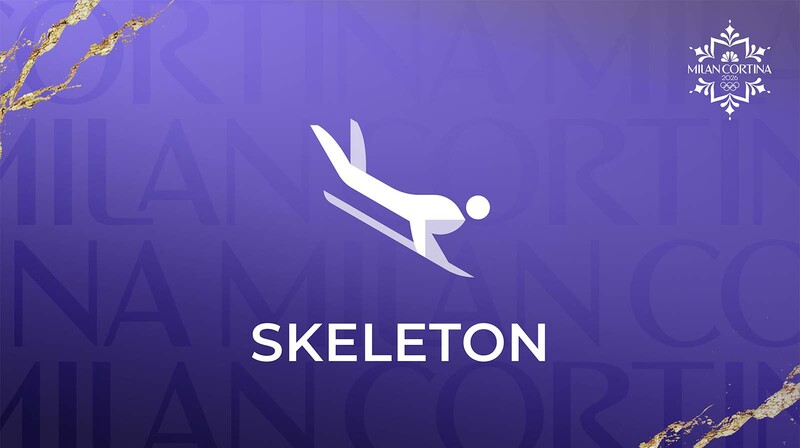
Skeleton, sometimes known as skeleton racing, is similar to luge in that an athlete is laying down on a small flat sled. The key difference is that skeleton racers must navigate the track face-first. It’s the “slowest” of the three sledding sports, but skeleton athletes can still hit up to 80 miles per hour.
Racers steer the skeleton sled using the torque of their head and shoulders and applying their body weight to different parts of the vehicle. Steering bolts or brakes are forbidden in the sled’s construction.
Skeleton is also a time trial medal event, so the fastest time wins. Skeleton features medal events for men and women. This is the first Winter Olympics that will feature a mixed relay team event for skeleton.
Germany continued their Winter Olympics sledding domination with gold and silver in the men’s event and gold in the women’s.
Bobsleigh
More commonly known as bobsled, this is the event you’re probably most familiar with, mostly thanks to iconic 1993 film Cool Runnings.
Bobsleigh features two- or four-person teams racing down the track in a high-sided sled, with the three fastest teams making the podium.
There are four bobsled medal events at the Winter Olympics: four-man bobsled, two-man bobsled, two-woman bobsled and the women’s monobob, a newer event making its second appearance in the Winter Olympic Games.
Germany dominated in the 2022 Winter Olympics, winning gold and silver in the four-man and the two-woman medal events and sweeping the podium in the podium for seven total medals. They are looking to win the bobsled medal count for the third consecutive Olympics.
Watch the 2026 Winter Olympic Games on DIRECTV
Don’t miss a minute of NBCUniversal’s coverage of the Milan Cortina Winter Olympics on your local NBC affiliate and Peacock with DIRECTV.

Frequently asked questions
Where can I watch the Winter Olympics?
Fans can watch the Winter Olympics on NBC and streaming on Peacock. NBC Olympic coverage begins on February 4, 2026.
What are the three sledding events at the Winter Olympics?
Luge, skeleton and bobsled each feature individual team events and mixed relays.
When did Skeleton become an event at the Winter Olympics?
Skeleton was featured in the 1928 and 1948 Winter Olympics but was discontinued until its return during 2002 Salt Lake City Olympics.
DIRECTV Insider brings you our views on what’s happening in streaming, t.v., movies and sports. Companies and persons mentioned are not necessarily associated with and do not necessarily endorse DIRECTV. We will disclose sponsored content on our site when we show it to you, and some of the links on the site may be ads or affiliate links which means DIRECTV may earn compensation from your purchases.