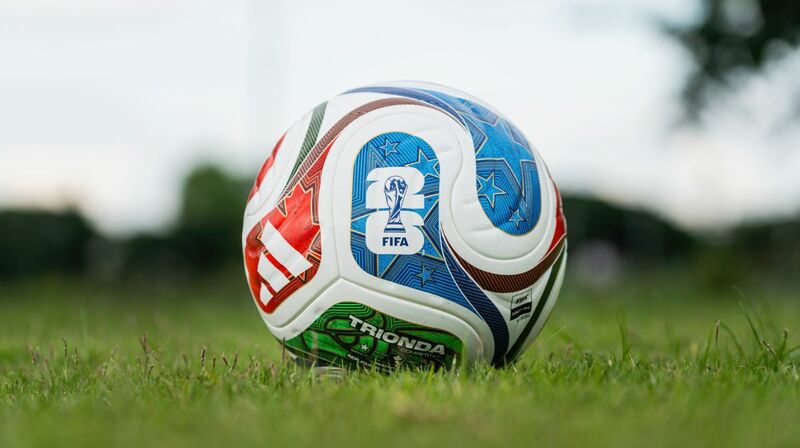
The 2026 FIFA World Cup™ introduces the biggest format change in tournament history. For the first time, 48 teams will compete across the United States, Mexico and Canada, creating a brand-new Round of 32 and a new path to advancement through the group stage.
If you’re wondering how teams qualify for the knockout rounds, how third-place teams can advance or how the new bracket works, here’s everything you need to know.
It’s the biggest World Cup ever: 104 matches across 39 days in 16 stadiums in the US, Mexico and Canada. And you can watch it every day on DIRECTV!
2026 FIFA World Cup™ Advancement Rules at a Glance
- 48 teams enter the tournament
- 12 groups of four teams (Groups A through L)
- Each team plays three group-stage matches
- Win = 3 points
- Draw = 1 point
- Loss = 0 points
- Top two teams in every group advance
- Eight best third-place teams advance
- 32 teams qualify for the knockout stage
- Knockout rounds: Round of 32 → Round of 16 → Quarterfinals → Semifinals → Final
How Do Teams Advance to the World Cup™ Round of 32?
In the 2026 FIFA World Cup, 32 of the tournament’s 48 teams advance from the group stage to the new Round of 32.
Teams can qualify in one of three ways:
- Finish first in your group (12 teams advance)
- Finish second in your group (12 teams advance)
- Finish among the eight best third-place teams across all 12 groups (8 teams advance)
Every team plays three group-stage matches and earns:
- 3 points for a win
- 1 point for a draw
- 0 points for a loss
After all group matches are complete, the top two teams in each group automatically qualify for the knockout stage. The remaining eight spots go to the best-performing third-place teams based on FIFA’s tiebreaking criteria.
| How Teams Reach the Round of 32 | Teams |
| Group Winners | 12 |
| Group Runners-Up | 12 |
| Best Third-Place Teams | 8 |
| Total Teams Advancing | 32 |
The biggest change in the 2026 format is the addition of the best third-place team qualification rule. In previous World Cups, only the top two teams from each group advanced. Now, a team can finish third and still reach the knockout stage, making every goal, point and tiebreaker more important than ever.
How Does the Third-Place Qualification Rule Work?
After the group stage, there will be 12 third-place teams — one from each group. The eight best third-place finishers qualify for the knockout stage, while the other four are eliminated.
Because these teams come from different groups and do not play each other, the FIFA Council ranks them using a tournament-wide comparison table rather than head-to-head results.
How FIFA Ranks Third-Place Teams
Third-place teams are ranked using the following tiebreakers, in order:
| Tiebreaker | What It Means |
| 1. Points | Total points earned in group-stage matches |
| 2. Goal Difference | Goals scored minus goals allowed |
| 3. Goals Scored | Total goals scored in group play |
| 4. Fair Play Record | Fewer yellow and red cards |
| 5. FIFA World Ranking | Most recent FIFA Men’s World Ranking |
In most cases, points and goal difference will determine which third-place teams advance. The later tiebreakers are only used when teams are extremely close in the standings.
Can a Third-Place Team Really Advance?
Yes. A team does not need to finish in the top two of its group to reach the knockout stage.
Depending on results across the tournament, a third-place team could advance with:
- One win and two losses
- One win, one draw and one loss
- Three draws
The result is that nearly every group-stage match remains meaningful until the final whistle. A late goal can improve a team’s goal difference, increase its points total, or help it win a tiebreaker that ultimately determines whether it reaches the Round of 32.
What Happens in the Case of a Group Tie?
If two or more teams finish tied on points in a World Cup group, FIFA uses a series of tiebreakers to determine the final standings.
The process starts with results between the tied teams and then expands to overall tournament performance.
World Cup group-stage tiebreakers include:
- Head-to-head points between tied teams
- Head-to-head goal difference
- Head-to-head goals scored
- Overall goal difference
- Overall goals scored
- Fair play record (yellow and red cards)
- FIFA World Ranking
What Is the New World Cup Round of 32?
The 2026 World Cup introduces a brand-new knockout round: the Round of 32.
In previous tournaments, teams advanced directly from the group stage to the Round of 16. With the tournament expanding from 32 teams to 48 teams, FIFA added an extra knockout round.
The knockout bracket now follows this path:
Round of 32 → Round of 16 → Quarterfinals → Semifinals → Final
Every knockout match is single elimination. Lose once and you’re out.
Stream 2026 FIFA World Cup™ Live with DIRECTV
Fans can keep up with the biggest soccer tournament in the world on FOX, FS1 and Telemundo with DIRECTV.
Get MySports® Genre Pack® for just $49.99/mo. for your first two months and start watching today. Get your first 5 days free, cancel anytime.

Frequently asked questions
Can World Cup Knockout Matches End in a Tie?
How many teams advance from each group?
Can you finish third in your group and still advance?
DIRECTV Insider brings you our views on what’s happening in streaming, t.v., movies and sports. Companies and persons mentioned are not necessarily associated with and do not necessarily endorse DIRECTV. We will disclose sponsored content on our site when we show it to you, and some of the links on the site may be ads or affiliate links which means DIRECTV may earn compensation from your purchases.