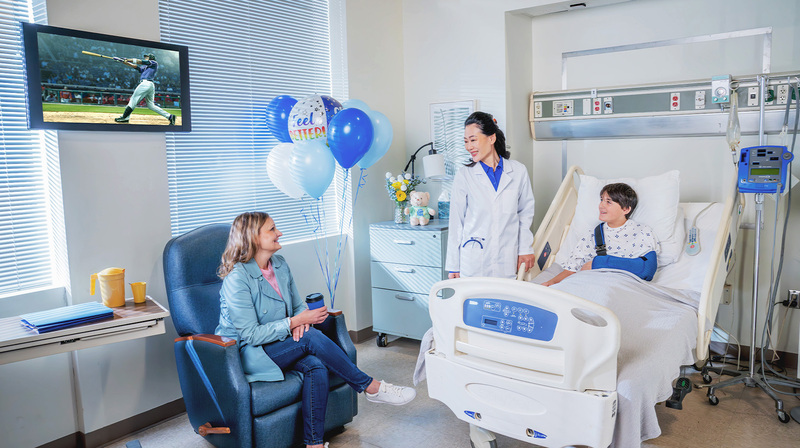
Walk into many hospital rooms and you may see the same pattern play out.
The patient isn’t sleeping. They’re not engaged. They’re staring at the ceiling, scrolling on their personal devices aimlessly, or pressing the call button—often not because they need a doctor or nurse, but because they’re restless.
For hospital staff, this isn’t just a “comfort” issue. It’s an operational and clinical challenge hiding in plain sight.
Why “hospital time” feels slower than the real world
An often-overlooked challenge in a hospital setting is how time is experienced by patients. Without the normal rhythms of daily life—work, social interaction, entertainment, and personal routines—time can begin to feel stretched and unstructured.
Long periods of inactivity, limited mobility, and unfamiliar surroundings can leave patients with little to focus on, making them far more aware of each passing minute. When you layer in stress, discomfort, and disrupted sleep, even a short stay can feel significantly longer than it is—helping to intensify feelings of restlessness and disengagement.
The problem: Impact of boredom on patient satisfaction scores
Hospital stays are, by nature, disruptive. Patients are removed from their routines, their environments, and their sense of control. What replaces that is often long stretches of inactivity.
Patient boredom may not be a clinical diagnosis, but it may impact how patients perceive their care, and that can lead to consequences across the entire patient care experience:
- Increased anxiety and stress
- More frequent non-clinical requests to staff
- Lower satisfaction scores
- A perception that time is moving slowly, which can amplify discomfort
Research consistently shows that patient experience is directly tied to patient satisfaction—and satisfaction, in turn, influences willingness to recommend the hospital and other measures of hospital performance.1
Even more compelling: hospitals with higher patient satisfaction scores have been shown to experience lower 30-day readmission rates, a key metric tied to both quality and reimbursement.2
In other words, how a patient feels during their stay isn’t separate from clinical outcomes—it’s part of them.
And yet, one of the most controllable aspects of that experience—how patients spend their time—often gets overlooked.
The missed opportunity: Patient engagement during downtime
Healthcare systems have invested heavily in clinical technology, but far less attention has been paid to patient engagement during downtime.
When patients are given tools to stay engaged—whether through tablets, media, or interactive systems, there can be a measurable impact. One study found that hospitalized patients provided with tablets (which offered both entertainment options and access to an inpatient health portal) reported higher satisfaction scores on a subset of HCAHPS measures, including likelihood to recommend the hospital, communication about medication, staff responsiveness, and discharge information.3
Why? Because engagement does three simple but powerful things:
- Reduces perceived wait times
- Improves mood and mental well-being
- Creates a sense of normalcy in an unfamiliar environment
This is where in-room patient entertainment can stop being a “nice-to-have” and can play a strategic role in the patient experience.
The solution: In-room patient entertainment
One familiar and accessible option is hospital tv entertainment, which can replicate the at-home experience many patients are used to.
Where available, this can include options such as:
- Live TV
- On-demand content
- Streaming options
An entertainment solution like DIRECTV for healthcare environments can help support this kind of familiar, at-home viewing experience.
.
How entertainment may help
A robust in-room entertainment system can do more than fill time—it may help support a more positive patient experience.
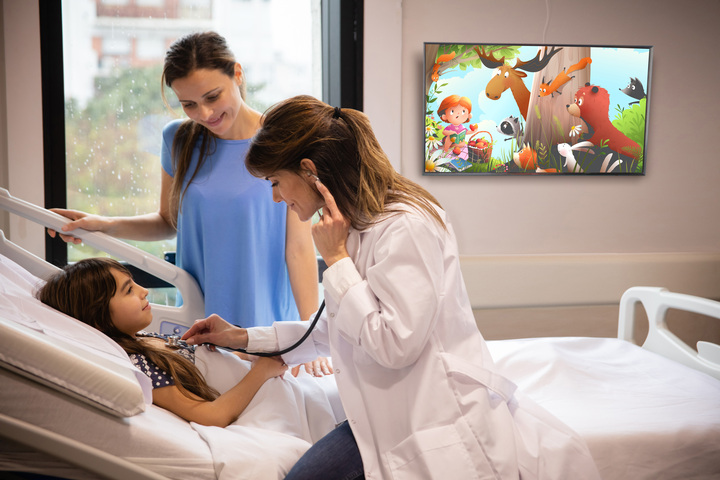
Here’s how:
1. It may help reduce restlessness
Providing patients with access to entertainment can offer an outlet during idle time. Allowing individuals to choose what they watch, listen to, or interact with may reintroduce small but meaningful decision-making, giving patients something familiar to engage with during their stay.
2. It could help improve satisfaction scores
Engagement tools that can include entertainment have been associated with higher scores on certain patient satisfaction measures.3 And those scores don’t just look good—they help influence reimbursement, rankings, and patient loyalty.
3. It may help lighten staff load
When patients are occupied and comfortable, they may be less likely to make non-essential requests, which could help free up hospital staff to focus on providing focused care.
Why basic cable isn’t enough to keep patients engaged
Not all hospital TV systems are created equal.
DIRECTV FOR BUSINESS® is built to deliver patient entertainment in hospitals.
Key advantages include:
- Robust channel lineups, including access to news, sports, and premium content
- Consistent signal reliability
- User-friendly interfaces
- Scalability across facilities and rooms
The difference is subtle but important: patients don’t feel like they’re using hospital equipment—they feel like they’re watching TV like they do at home.
And that familiarity matters.
Patient experience is built in the quiet moments
Clinical care will always be the priority. But the reality is, patients spend much of their hospital stay not receiving active treatment.
They’re waiting. Resting. Recovering. That downtime is where perception is formed.
Hospitals that recognize this and invest in hospital tv packages and patient entertainment solutions can help improve those in-between moments.
Because sometimes, improving care isn’t about adding more interventions.
It’s about making the time in between them better.
Get DIRECTV FOR BUSINESS® for your hospital
The hospital room is no longer just a clinical space — it is part of the overall care journey. By addressing patient boredom, hospitals can strengthen the healing environment and elevate how patients experience their stay.
With DIRECTV FOR BUSINESS, hospitals benefit from equipment subsidies, nationwide availability, 99% worry-free signal reliability4 and hassle-free professional installation. Looking for tv service for hospitals? Visit us online to learn more.
1 https://pmc.ncbi.nlm.nih.gov/articles/PMC9617665/
2 https://pubmed.ncbi.nlm.nih.gov/21348567/
3 https://pmc.ncbi.nlm.nih.gov/articles/PMC6931050/
4 Based on a Nationwide Study of representative cities.
Availability of DIRECTV service may vary by location. In certain markets, programming/pricing may vary. Hardware and programming available separately. Receipt of DIRECTV programming subject to terms of the DIRECTV Terms of Service. Taxes not included. DIRECTV programming, hardware, pricing, terms and conditions subject to change at any time. All other marks are the property of their respective owners. ©2026 DIRECTV. DIRECTV and all other DIRECTV marks are trademarks of DIRECTV, LLC. All other marks are the property of their respective owners.